The Bristol Company, Waterbury, Connecticut:
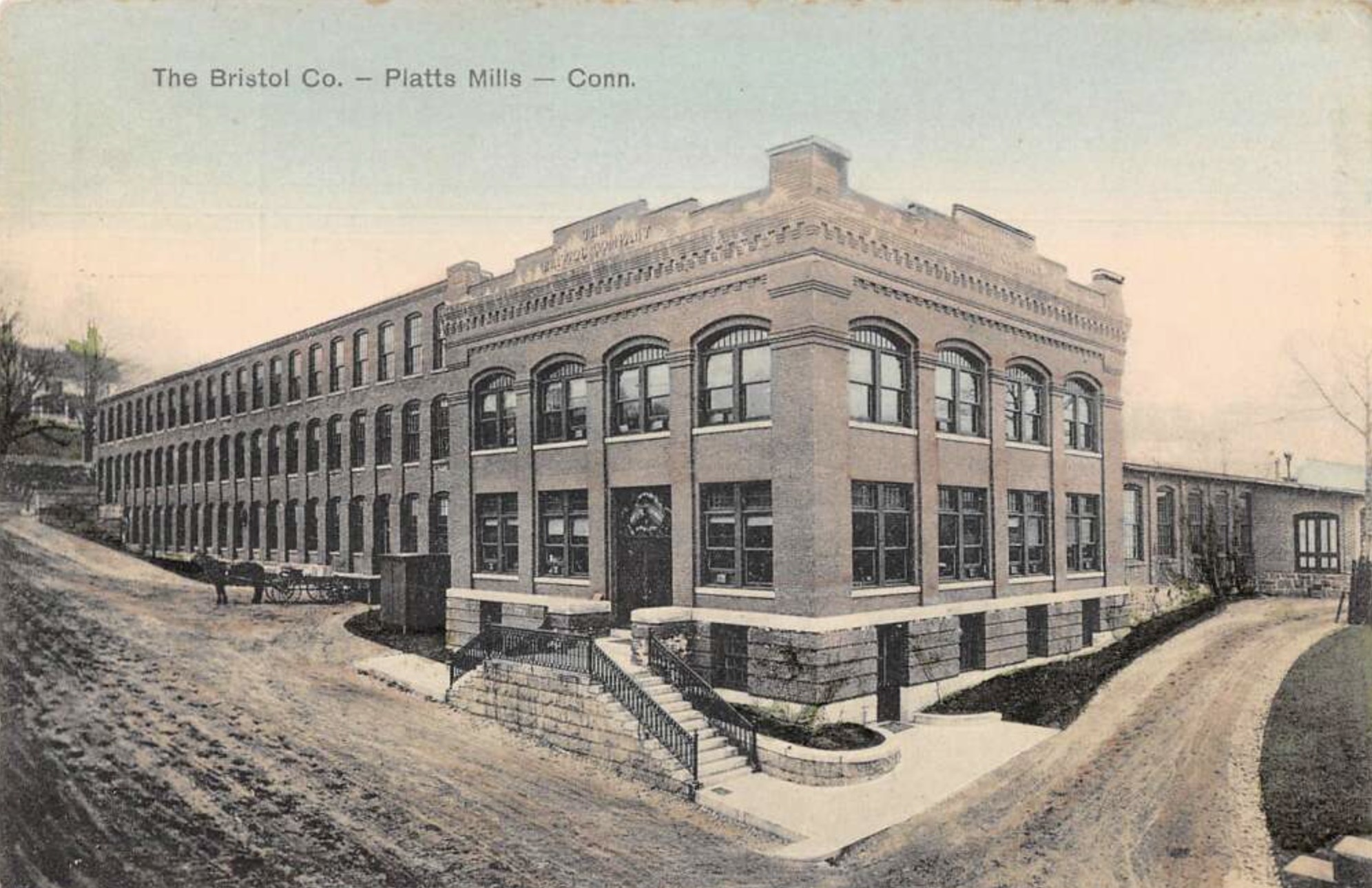
At 40 Bristol Street in the Platts Mills section of Waterbury are remnants of a forgotten factory complex. Over six acres contain more than 310,000 square feet of dilapidated factory buildings dating back to 1892. Though the land is now contaminated with waste, pollution, asbestos and graffiti, the site remains historically significant due to the technological advancements of inventor William Henry Bristol and The Bristol Company.

William H. Bristol was born July 5, 1859. The Waterbury native attended public school in Naugatuck and worked as a clerk in a general store before going to college. He earned a Mechanical Engineering degree from the Stevens Institute of Technology in Hoboken, New Jersey and by 1899, he was teaching courses at Stevens as a professor of mathematics.

Around this time, Bristol patented a steel fastener design for leather belts and straps. William’s father Ben Bristol, a machinist for A. Platt and Company (in existence today) invested in machinery to manufacture the fasteners. With help from his father and his brothers Franklin and Howard Bristol, William established the Bristol Company in 1889 at a family barn in Naugatuck.

Then in 1892, the Bristol family commissioned a brick factory to be erected across the Naugatuck River from A. Platt and Co. They intentionally planned the factory to have easy access to the railroad on the property. While his metal fasteners were a success, William H. Bristol kept on experimenting.
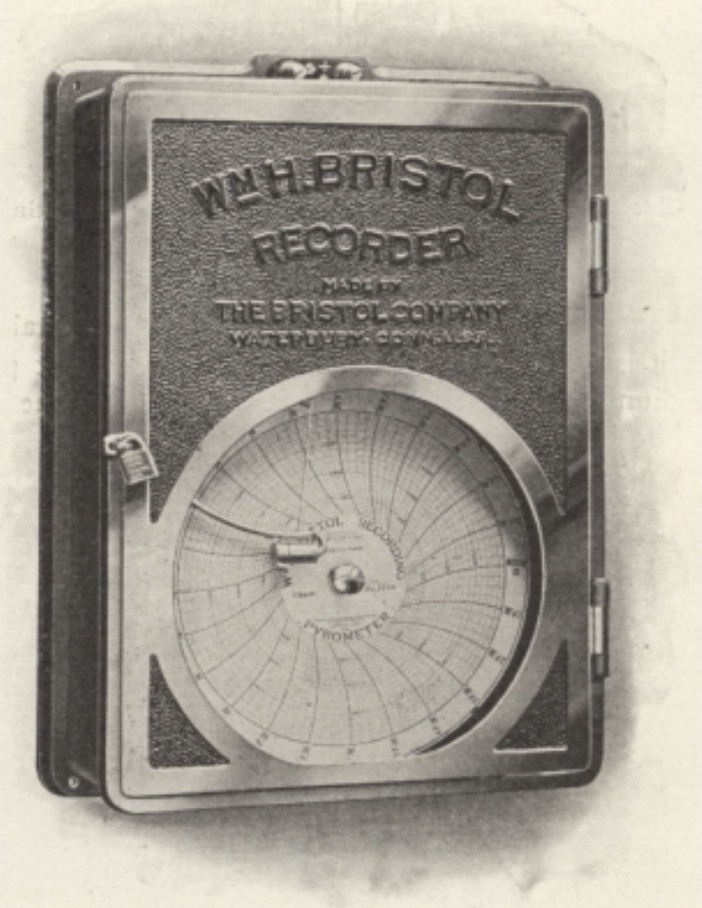

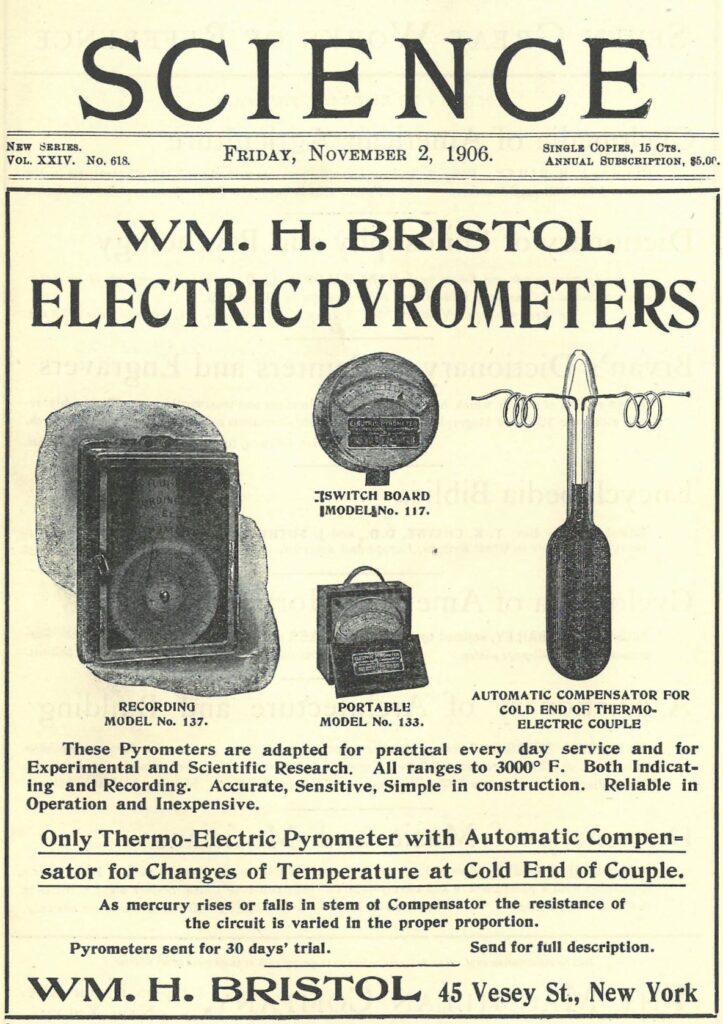

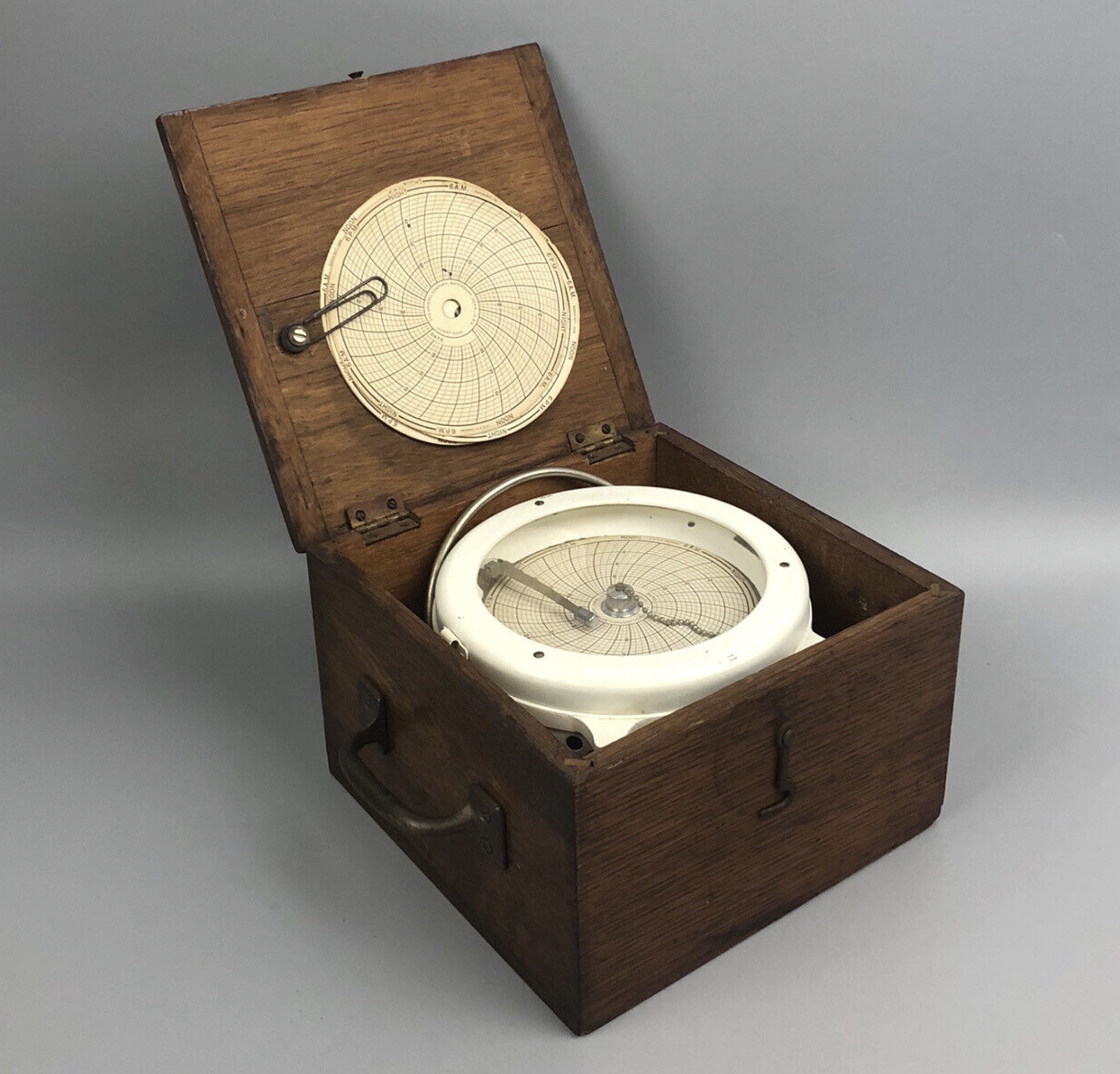
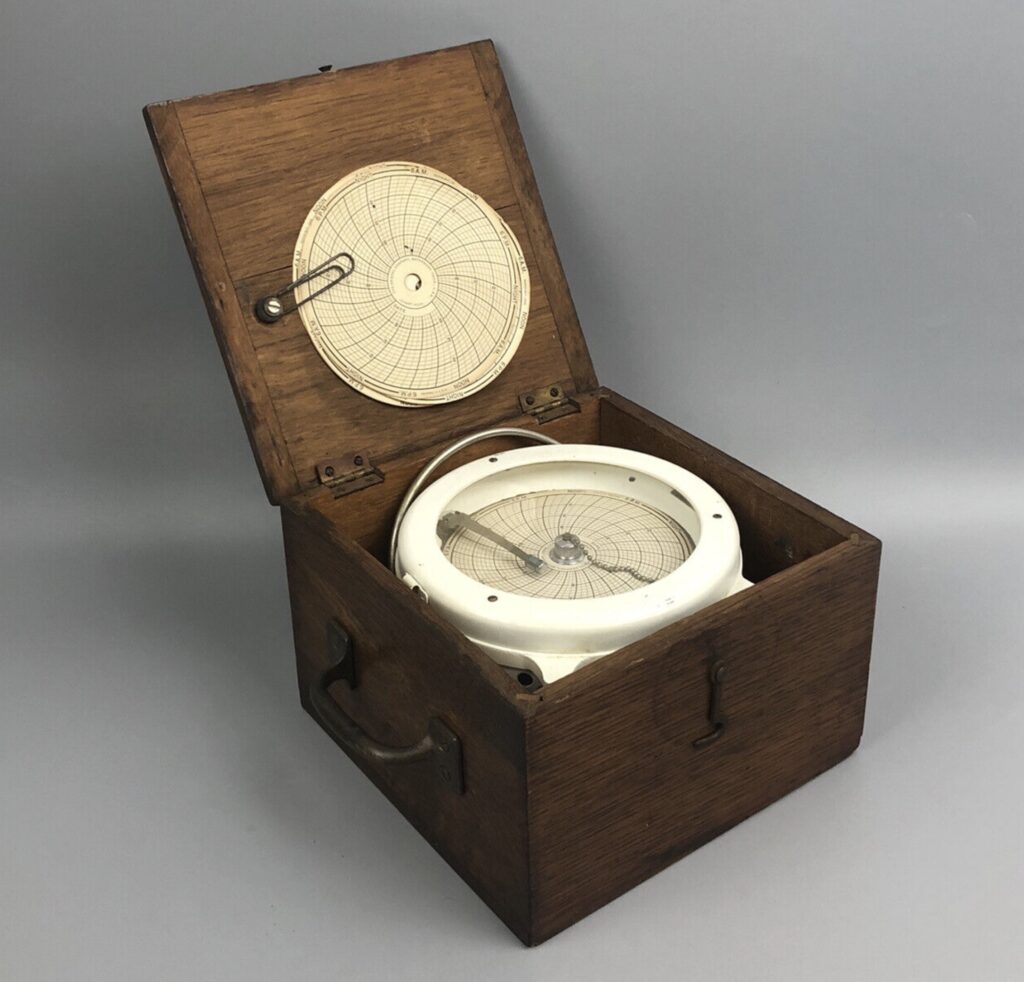
He modified Bourdon tubes and devised a system to record temperature and atmospheric pressure. From Bristol’s pressure gauge came the natural progression of other recording and monitoring instruments such as voltage, wattage, amperage and heat-reading meters. In 1904, Bristol employed 50 people. By 1918 the workforce had grown to 400 as the business expanded its product line.

Bristol perfected the pyrometer, a remote-sensing thermometer as well as the hygrometer, a device for measuring water vapor in confined spaces. Several patents were filed for other useful gadgets. His factory at Platts Mills received international recognition for manufacturing the world’s most advanced industrial instruments.

He was awarded the John Scott Medal in 1890 and the Edward Longstreth Medal from the Franklin Institute in 1894. Bristol exhibited and accepted awards at Chicago’s World’s Fair (1893), the Paris Exposition of (1900), San Francisco’s Pan-Pacific Exposition (1915) and at Philadelphia’s Sesquicentennial International Exposition (1926). Bristol’s thrived amid World War I, producing gauges, meters, counting and measuring devices and airplane instrumentation for the Allied Powers.

In a separate venture, Professor Bristol contrived the “Bristolphone.” This invention led to the founding of the William H. Bristol Audio Picture Corporation in 1920. He produced one of the first full-length motion pictures with synchronized sound. To devote more time to experimentation and movies, Bristol placed the active management of The Bristol Company with his nephew, Howard H. Bristol. By 1925, the company had branch offices in nine U.S. cities.
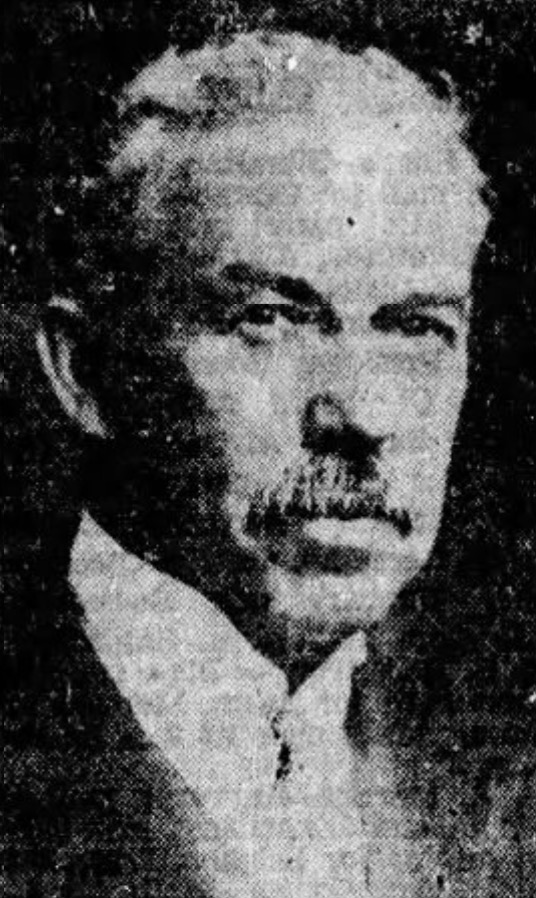
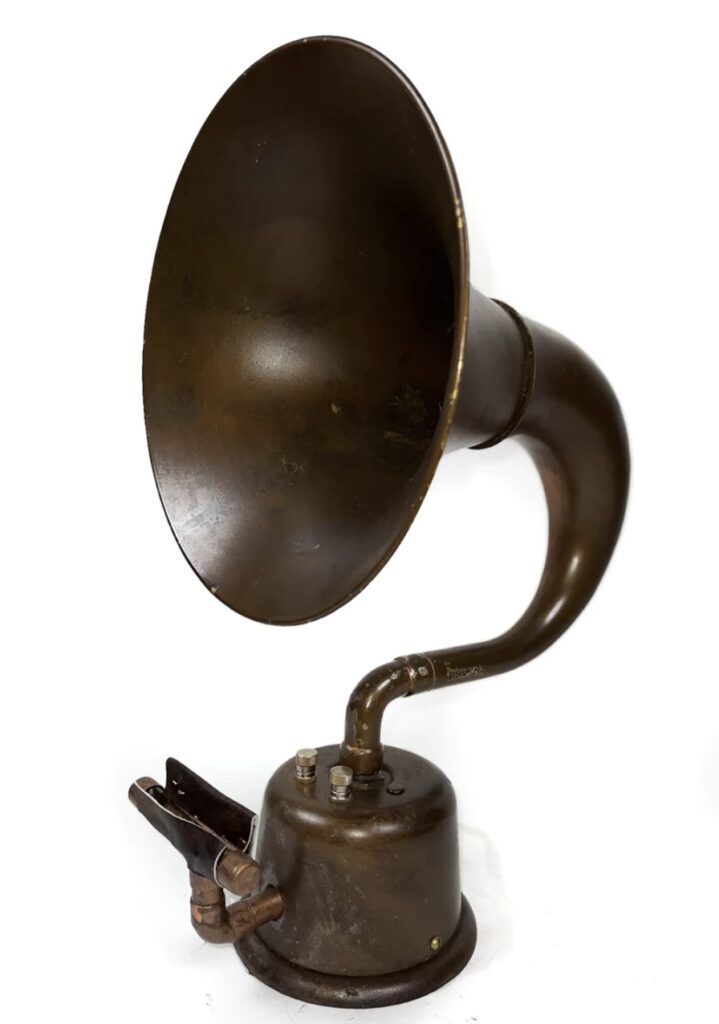
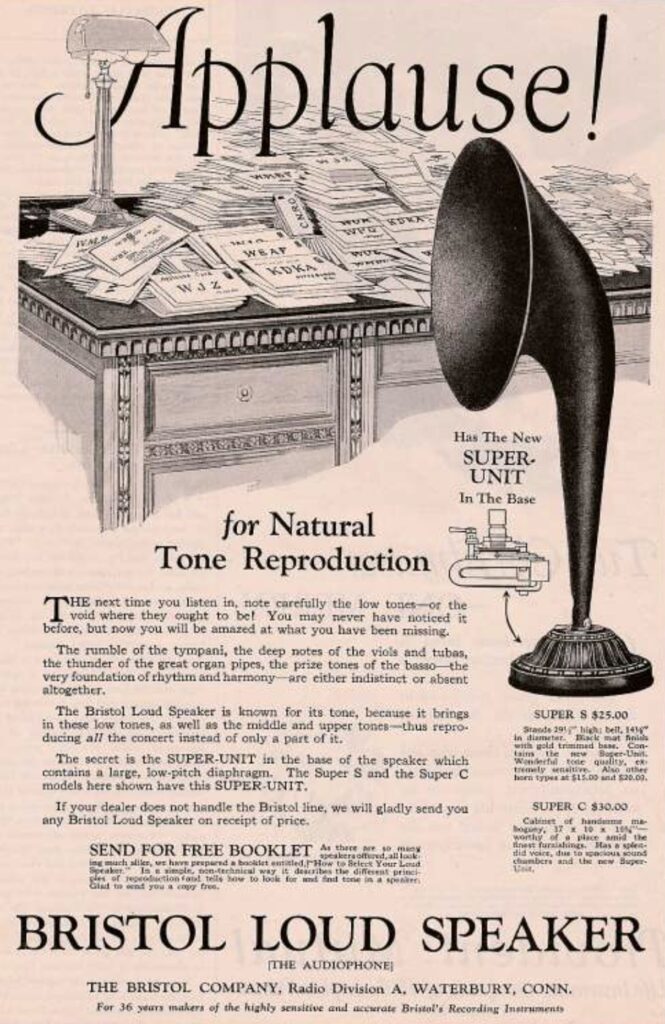


William H. Bristol also revolutionized public address systems with his “Audiophone.” His first speaker systems were installed at Yankee Stadium and Grand Central Station in New York. His Bristolphones and Audiophones were being used by movie houses throughout the United States long after Bristol’s passing. At the time of his death, on June 18, 1930, he had been issued almost one hundred U.S. patents.

During World War II, the Bristol Company played a critical role in manufacturing torpedo explosion mechanisms. They contributed their technology to the Manhattan Project in the making of the world’s first atomic bomb. Bristol also made underwater sonar equipment and aerial instruments in partnership with the United States government. In 1945, Bristol employees were awarded the Army-Navy “E” award for their outstanding war production efforts.

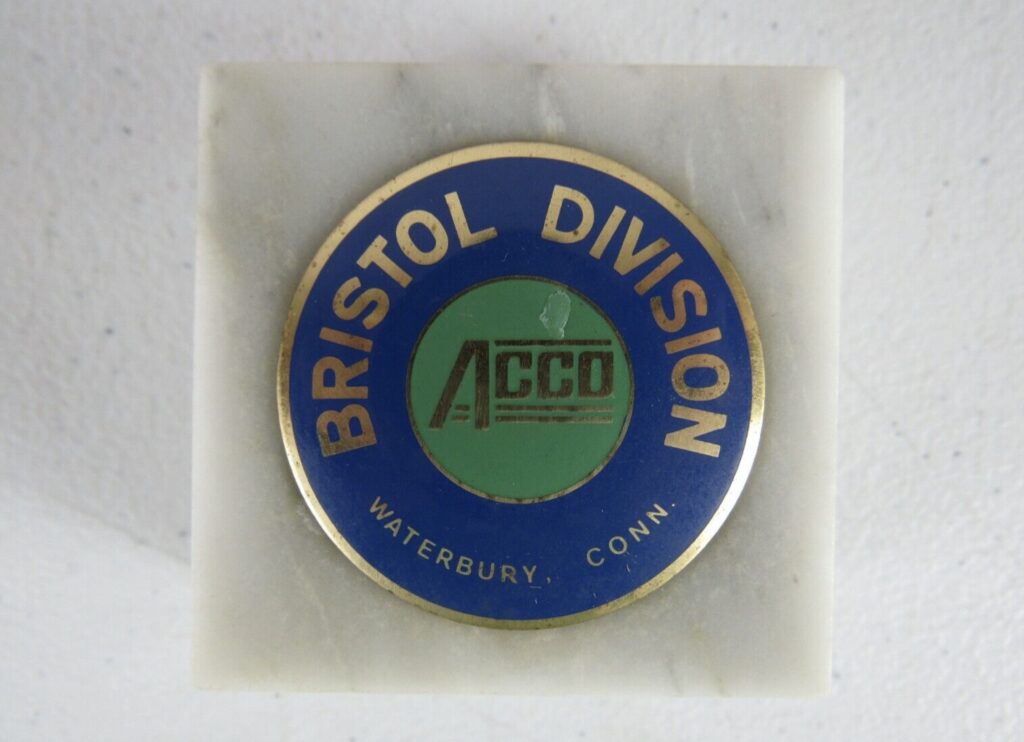
By the mid-1980s the Bristol Company sold and operations were moved to Watertown, Connecticut. After nearly a century in business, the Platts Mills part of Waterbury had become known as the neighborhood of Bristol in reverence to the Bristol Company. ACCO Industries later purchased 40 Bristol Street, renaming it the Bristol-Babcock division, but the factory went out of business by 2005.


A 2015 fire destroyed the old Bristol factory and the site turned into a popular spot for squatters and vagrants. The Connecticut Department of Economic and Community Development issued a $200,000 grant in 2019 to clean up the land and assess its environmental impact. The State of Connecticut has designated the entire parcel as a brownfield.

A brownfield is a property where the expansion, redevelopment, or reuse may be complicated by the presence or potential presence of hazardous substances, pollutants or contaminants. Many brownfield sites require remediation with costs that far exceed the value of the property, and yet the transformation of brownfield sites is vital to local communities.*

*Here’s a local list of brownfields according the Naugatuck Valley Council of Governments: https://nvcogct.gov/what-we-do/brownfields-2/funding
Sources
-
Forster, Mike. “Bristol Co. FIRE 2015.” Connecticut Mills, Connecticut Trust for Historic Preservation, connecticutmills.org/find/details/bristol-co.-fire-2015. Accessed 8 Oct. 2022.
-
“William Henry Bristol.” Wikipedia, Wikimedia Foundation, en.wikipedia.org/wiki/William_Henry_Bristol. Accessed 8 Oct. 2025.
-
Bristol’s Recording Instruments Manufactured by the Bristol Company, Waterbury, Conn., U.S.A. Bristol Company, 1925. Internet Archive, archive.org/details/BristolsRecordingInstrumentsManufacturedByTheBristolCompanyWaterbury. Accessed 8 Oct. 2025.
View on Instagram: https://www.instagram.com/reel/CKUOXdeDCmx
View on Google Maps: https://maps.app.goo.gl/cNYy3oqNuPFTKMBA6