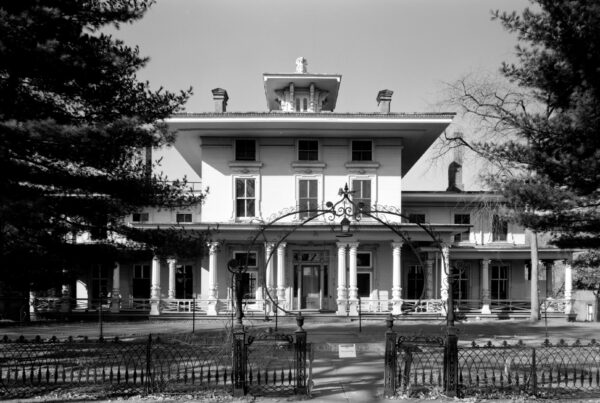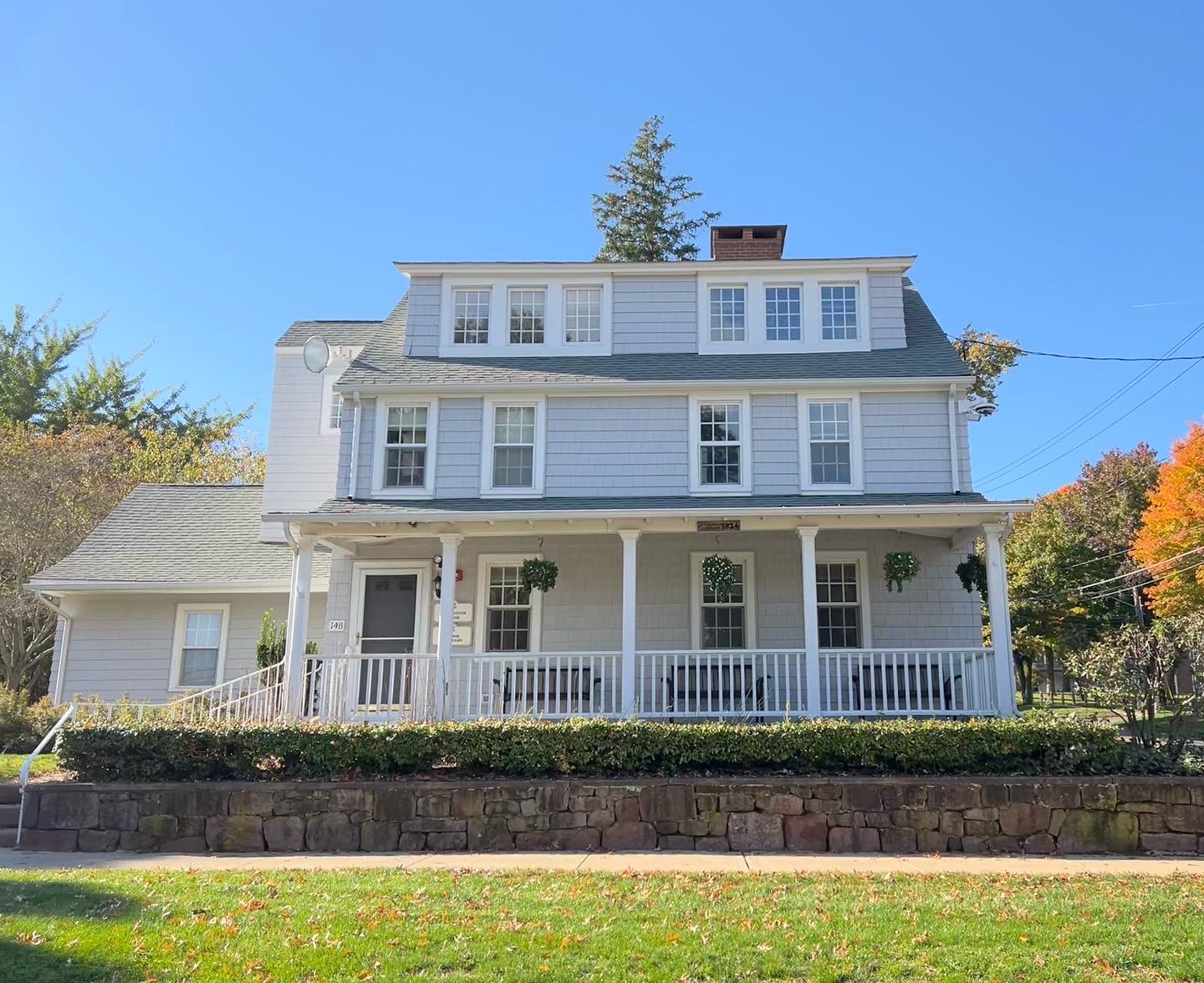
Carrington House, Wallingford, Connecticut:
At the corner of North Elm Street and Christian Street is an early Federal style house erected in 1824. Nowadays, the property belongs to Choate Rosemary Hall, but it was once home to the Carrington family, who drew their lineage to the first settlers of Connecticut.
An extensive Carrington ancestry traces back to at least the 12th century when Sir Michael Carrington bore standards for King Richard I of England. About a half millennium later in 1640, the same family helped establish the Town of Farmington, Connecticut. They were influential in local matters even after two members of the family, John and Joan Carrington of Wethersfield, were executed for witchcraft in 1651.
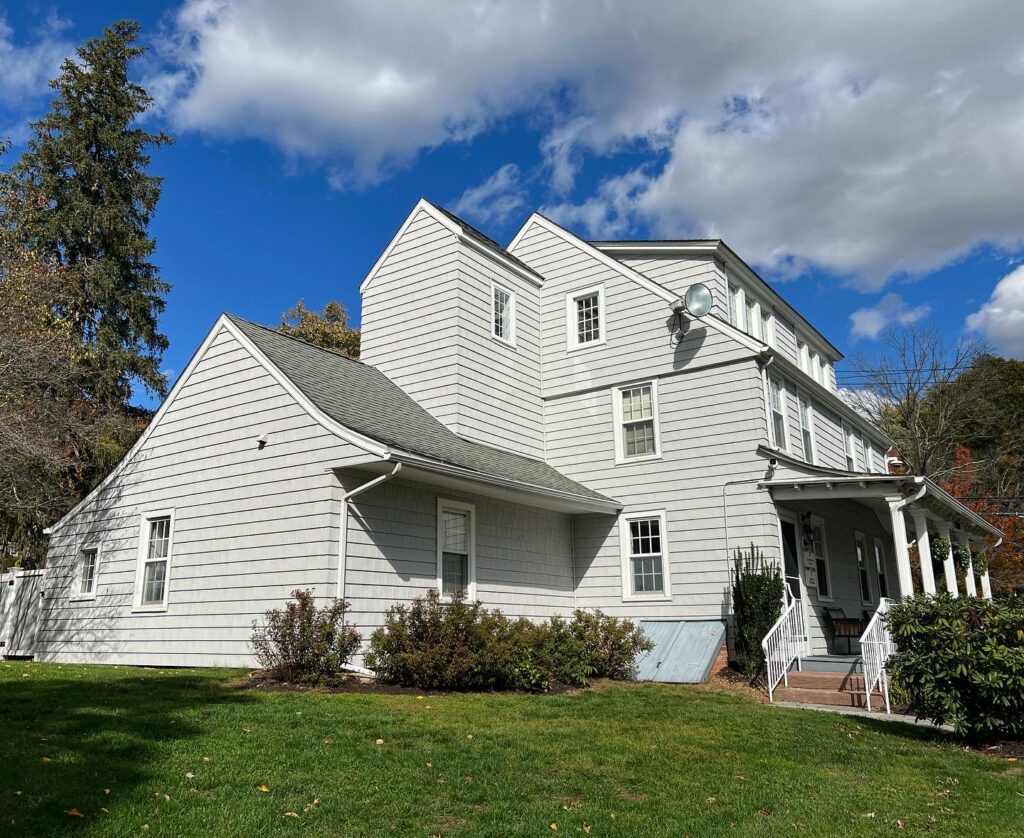
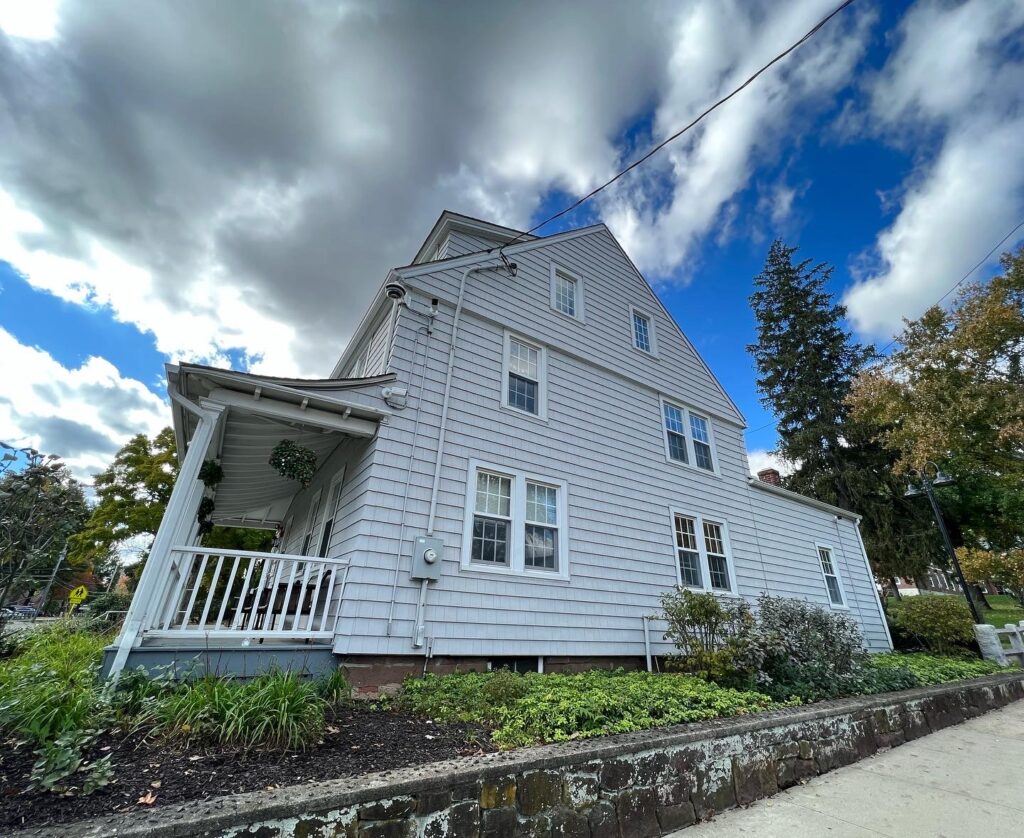
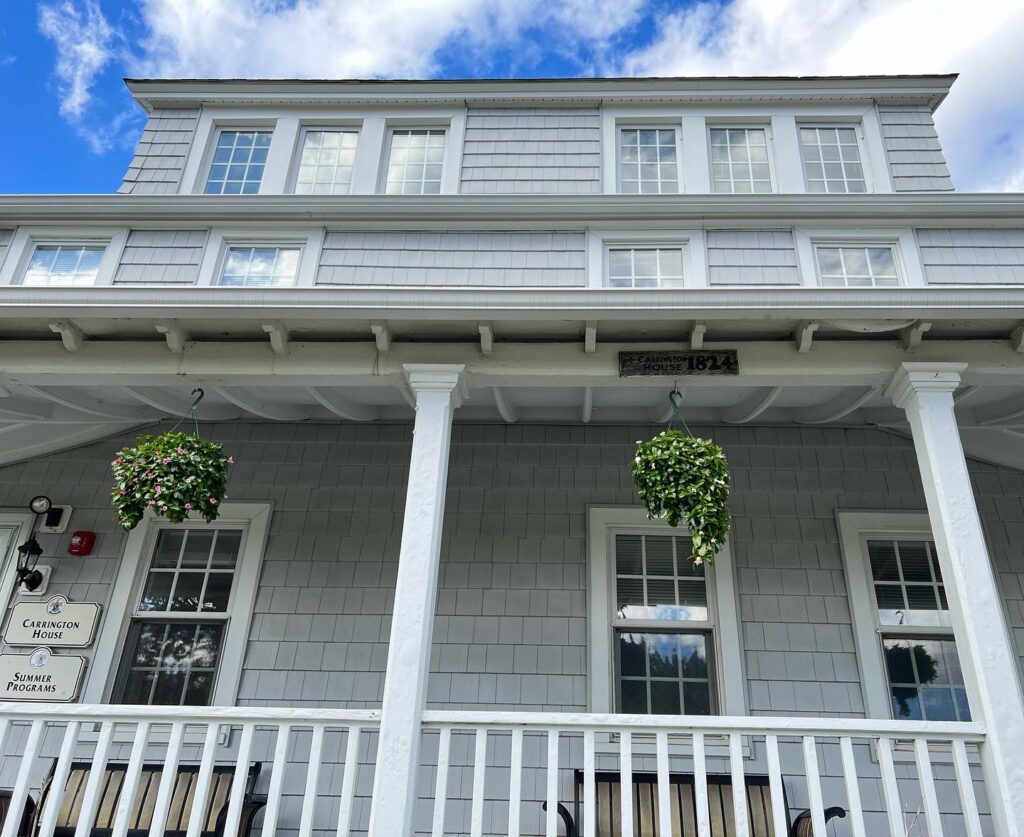
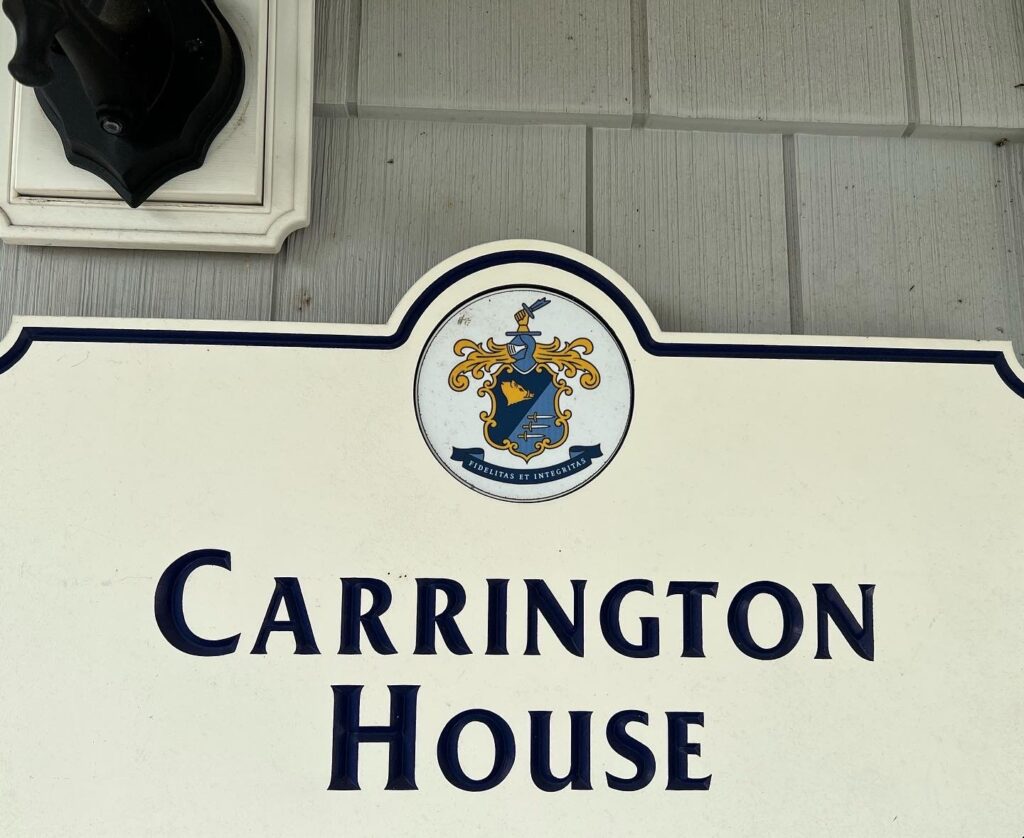

As for Wallingford’s Carrington House, the first deedholder was likely James Carrington, an inventor who apprenticed under Eli Whitney. On April 14, 1832, James Carrington patented a rolling parallel ruler that prevented ink from smearing. In 1849, the U.S. House of Representatives ordered six dozen Carrington rulers for $2.30 per dozen.
Carrington House is supposedly the birthplace of James Carrington’s grandson, Henry Beebee Carrington; Brigadier General of the American Civil War, Yale Law School graduate, abolitionist, prolific author, educator, historian and founder of the Ohio Republican Party.


Perhaps because he never personally led a regiment into battle, H. B. Carrington was a controversial figure. Critics blamed him for the 1866 Fetterman Massacre during Red Cloud’s War. While in command of Fort Phil Kearny, Wyoming, Carrington, a detachment of 81 United States Army soldiers, were killed by nearly 1,000 Lakota, Cheyenne and Arapaho fighters. Carrington later claimed his men had been insubordinate, but nonetheless, the massacre forever tarnished his military career.
Books authored by H. B. Carrington: The Scourge of the Alps (1847) Russia Among the Nations and American Classics (1849) Battles of the American Revolution, 1775-81 (1876) Crisis Thoughts (1878) Battle Maps and Charts of the American Revolution (1881) The Indian Question (1884) Battles of the Bible Boston and New York, 1775 and 1776 (1885) Washington the Soldier (1899) The Exodus of the Flat Head Indians (1902).
Fun fact: A few blocks away from Carrington House once stood the Carrington Inn at the southern corner of Center Street and Main Street (where the Post Office is today). President George Washington visited Carrington Inn on his 1789 tour of New England.
Sources
-
“Fetterman Fight.” Wikipedia, Wikimedia Foundation, https://en.wikipedia.org/wiki/Fetterman_Fight. Accessed 8 Oct. 2025.
-
luinrina. “Administrator, Spymaster – Henry B. Carrington.” Civil War Talk, https://civilwartalk.com/threads/administrator-spymaster-%E2%80%93-henry-b-carrington.154394/
-
“Henry B. Carrington.” Encyclopedia Virginia, Virginia Humanities, https://encyclopediavirginia.org/735hpr-4c8525f4a23e10f/. Accessed 8 Oct. 2025.
View on Instagram: https://www.instagram.com/p/CkCtN0fMPkn
View on Google Maps: https://maps.app.goo.gl/ZrK6qd8NAbUZ1V9WA